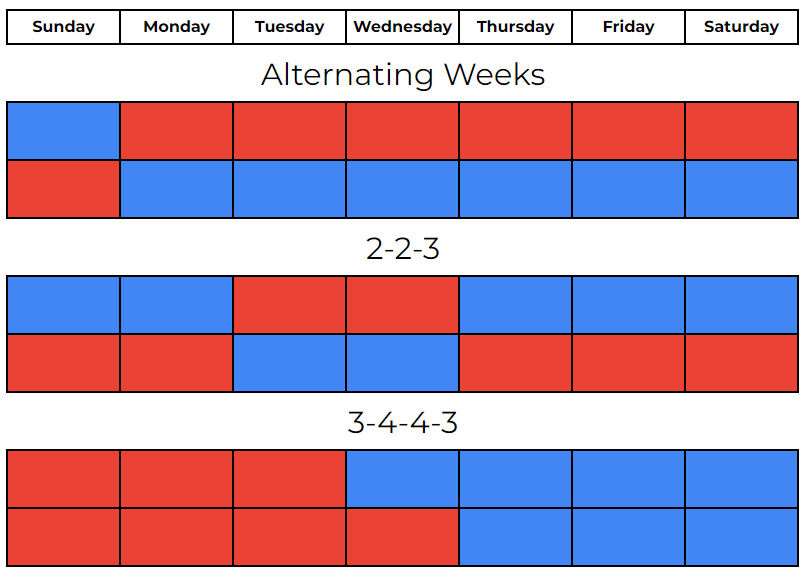
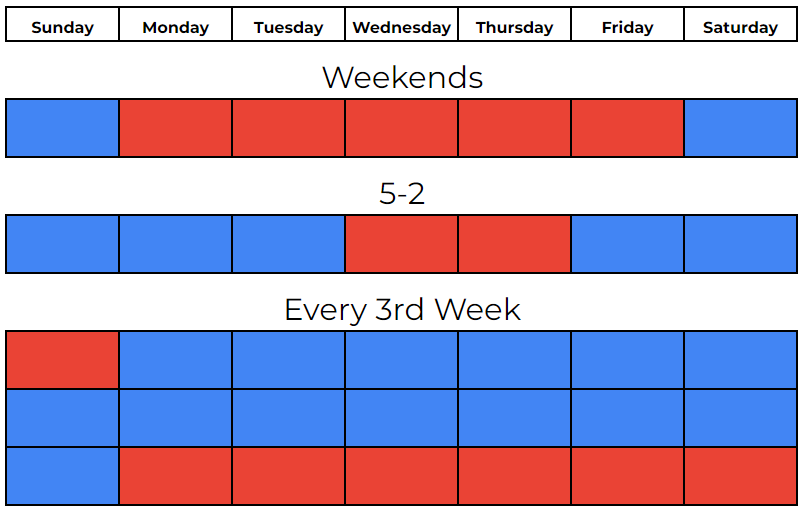
During the divorce process parents have to figure out how time with their children will be split. This decision is based on many factors:
Financial, physical, and mental health of the parents
Parents’ relations and interactions with their children
Homes, schooling, and activities
Ages of the children, the older they are the more their opinion on where they want to live is taken into account
You have a voice, but you don’t have the voice. The adults are in charge and it would be inappropriate for you to be calling the shots or making these decisions. However, your parents will have your best interests when they make these custody decisions. Feel free to talk to a CFI or PRE or another therapist if you are concerned about your custody arrangements. For more information about the legal process or the people involved click here.
50/50 Parenting Time
In this type of schedule, time between both parents is split evenly. This works best if the parents live close to each other, are able to communicate effectively, and the child is fine with living in two houses and the change that comes with. The advantage of this schedule is that children have time to connect and bond with each parent.
60/40 Parenting Time
In this type of schedule, one parent has the children for 60% of the time and the other parent has the children the other 40% of the time. 60/40 schedules are mainly used because 50/50 schedules have to many exchanges for the parents’ and the children’s situations.
70/30 Parenting Time
In this type of schedule, one parent has the children for 70% of the time and the other parent has the children the other 30% of the time. 70/30 schedules are mainly used if the parents live further away from each other or the child does better with having a more stable home.
Long Distance
If one parent moves away or travels it might be difficult to keep up a consistent custody schedule with a set amount of time with each parent. For long distance custody, children might stay with the long distance parent for certain weekends every month and some holidays, while spending the rest of the year with the other parent. If you have a long distance parent, you could stay in touch by doing video chats and phone calls to tell them how you’ve been.